
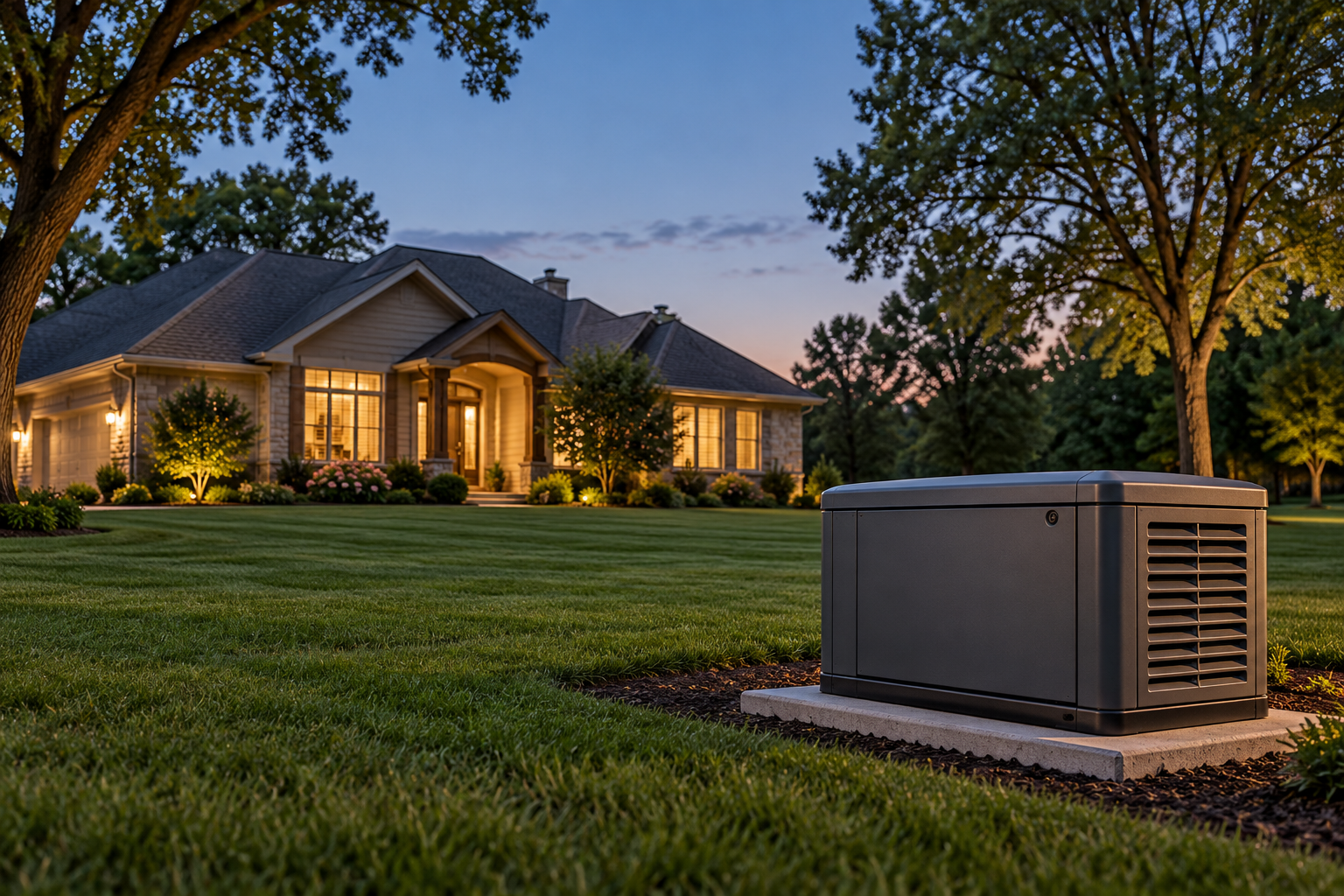
Keep your priorities
in power.
Plan backup power around what matters at home. Explore a new standby system, maintenance or a fault assessment, with the property and your priorities at the center of the conversation.
What are you planning?
Start with your project and town. Contact details come next.
Start with what you want to keep running
A standby generator is one part of a home backup system. The plan also includes fuel, transfer equipment and the circuits you want supported when utility power is unavailable.
Begin with your priorities: heat, refrigeration, lights, a sump or well pump if you have one, and any other loads you want assessed. A larger generator is not a substitute for checking how those loads work together.
A clear path for your next step.
Choose the question that matches your property. Start with planning, or tell us about the system you already own.
Plan a new system
Match your backup goals to the property, fuel supply and transfer equipment.
02 / GENERATOR PLANNINGMaintain your generator
Use the model, service history and run hours to plan the next check.
03 / GENERATOR PLANNINGRequest a fault assessment
Describe the alert or symptom without opening equipment or attempting repairs.
04 / GENERATOR PLANNINGReview replacement options
Compare the existing setup with changes in loads, fuel and future needs.
05 / GENERATOR PLANNINGChoose what to power
List your household priorities before selecting generator capacity.
06 / GENERATOR PLANNINGUnderstand transfer equipment
Learn how compatible transfer equipment fits the complete backup system.
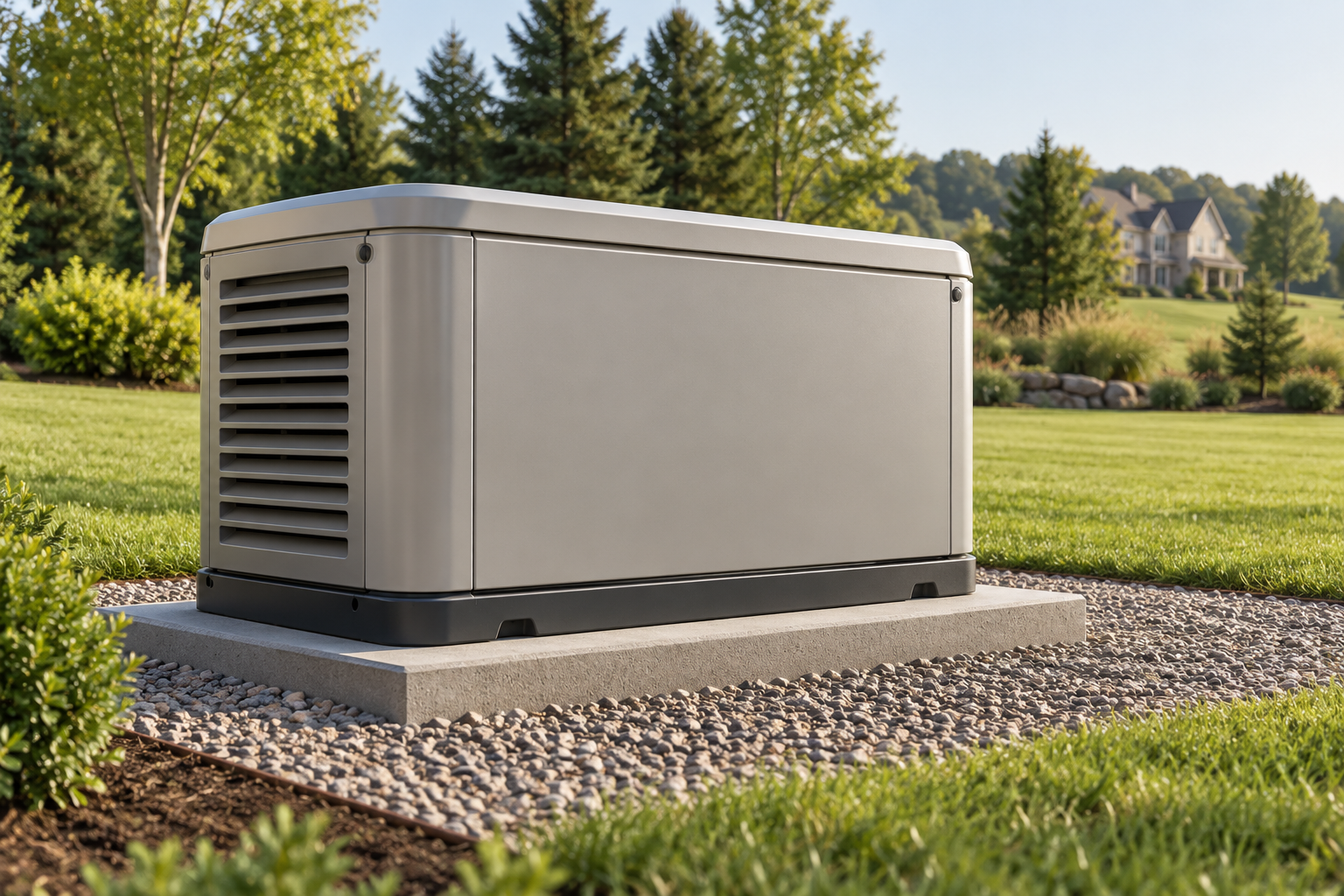
More than choosing
a generator size.
The right plan connects the loads you need, a suitable fuel supply, transfer equipment and a safe outdoor location. A property assessment brings those decisions together.
Compare your options →New system, routine service or an existing problem?
For a new installation, start with the desired backup coverage and an assessment of the property. For equipment you already own, the model, service history and any safely visible alert help frame the next conversation.
An inquiry does not book a technician or establish that a particular brand can be serviced. Provider availability, compatibility and the proposed work are confirmed before any job is arranged.
A good plan connects four decisions
Capacity, fuel, placement and transfer equipment affect one another. Confirm the complete system rather than choosing a generator first and leaving the other decisions for later.
- Assess the household loads and backup priorities.
- Agree on the equipment, written work scope, approvals and responsibilities.
- Have the authorized work completed by the appropriate qualified providers.
- Arrange inspection, system testing and a clear owner handover.

Planning across Elkhart County
Explore location guidance for Elkhart, Goshen and Nappanee, along with county coverage for Bristol, Middlebury, Wakarusa, Millersburg, Dunlap and New Paris.
The mailing town does not by itself determine which permit office applies. The property location and actual provider availability must be checked for each inquiry.
Tell us about the property and the goal
Start with your town and whether you are planning a new system or need help with an existing generator. You do not need to diagnose equipment or calculate the generator size to begin.
The website owner reviews inquiries. The actual contractor, availability, price and any agreement are confirmed separately before work proceeds.